Do You Need a Permit for a Pergola in Melbourne?
In most cases, yes - you need a building permit for a pergola in Melbourne. But there are exemptions for small, freestanding, open-frame structures under 20m². Here's a plain-English guide covering VIC permit rules, Australian Standards compliance, the full permit process, costs, and what ASG Shading handles for you.
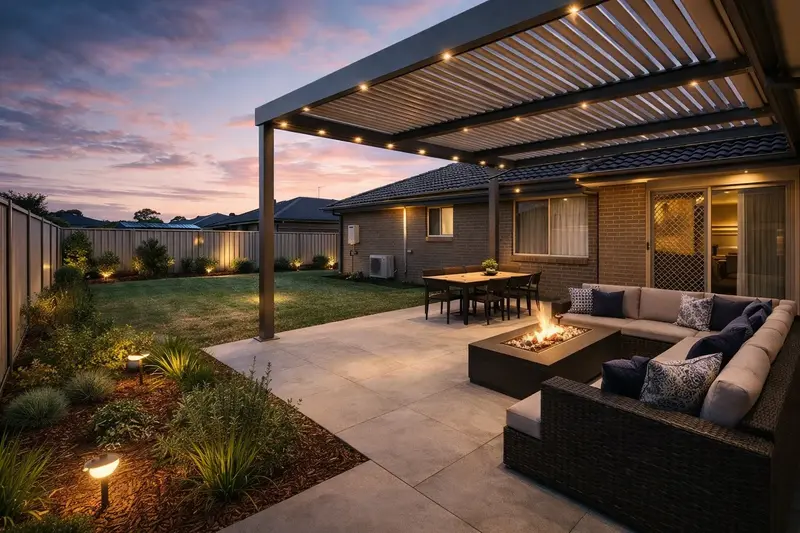
TL;DR: In most cases, yes — you need a building permit for a pergola in Melbourne. But there are exemptions. A small, freestanding, open-frame pergola under 20m² with no solid roof may be exempt — but add polycarbonate, Colorbond, louvered blades, or any waterproof roofing and it's legally reclassified as a verandah, which always requires a permit regardless of size. ASG Shading handles the full permit process for every installation — site assessment, engineering certified to Australian Standards (AS/NZS 1170, AS/NZS 1664, NCC), documentation, and building surveyor coordination — so you don't have to.
The Short Answer
In most cases, yes — you need a building permit for a pergola in Melbourne. But there are exemptions for very small, simple structures.
Victoria's building regulations are set by the Victorian Building Authority (VBA) under the Building Regulations 2018, Schedule 3. These rules are consistent across every Melbourne metropolitan council — from Wyndham to Yarra Ranges.
When You DON'T Need a Permit
Your pergola may be exempt from a building permit if it meets ALL of these criteria:
- Floor area under 20 square metres — that's roughly 5m × 4m
- No solid roof — open-frame, shade cloth, open-weave lattice, or wire for climbing plants only
- Maximum height of 3.6 metres — from ground level to the highest point
- Not more than 2.5m forward of the front wall of your house (if attached)
- Not located over an easement — council or water easements are off-limits without written consent
- Not in a heritage overlay or bushfire zone
- Doesn't affect stormwater drainage on your property or your neighbour's
- Complies with siting regulations — set back from boundaries as required by your council
- Not made of masonry (brick or stone)
- Does not affect the structural integrity of any building it's attached to
That's a fairly restrictive set of conditions. And here's the key point — the exemption only applies to open-frame pergolas with no solid roof. The moment you add any form of waterproof roofing, the structure becomes a verandah, which always needs a permit.
When You DEFINITELY Need a Permit
You need a building permit if your pergola:
- Exceeds 20 square metres — a typical 5m × 5m pergola is 25m², so many practical installations exceed this
- Has a solid or closable roof — this includes louvered, retractable, polycarbonate, Colorbond, or any waterproof roofing material
- Is attached to your house and affects the dwelling's structural integrity
- Is in the front yard or extends more than 2.5m forward of your front wall
- Is higher than 3.6 metres
- Sits over an easement or within a heritage, flood, or bushfire overlay zone
- Requires structural changes to your home — bolt-on connections, removing walls, modifying roof lines
- Affects neighbours' properties — stormwater runoff, overlooking, or boundary proximity issues
In practice, most pergolas that are large enough to genuinely improve your outdoor living space will need a building permit — and that's completely normal.
The "Solid Roof" Trap — Pergola vs Verandah
This is the single most important distinction in Victorian building law for outdoor structures, and it catches a lot of homeowners off guard:
- Open roof = pergola — may be exempt from a building permit (if under 20m² and meets all other exempt criteria)
- Solid roof = verandah — always requires a building permit, no matter the size
As soon as you add a single sheet of polycarbonate (Laserlite), Colorbond, or any waterproof material, the structure is legally reclassified as a verandah. This includes:
- Louvered pergolas like the ASG Pergola 175 or Pergola 163 — the motorised blades seal to form a waterproof roof
- Retractable pergolas like the ASG Pergola 180 — the PVC or fabric canopy is considered a solid covering when extended
- Any fixed polycarbonate, glass, or metal roofing
What this means for you: if you want a weatherproof outdoor area (which most Melbourne homeowners do), you will need a building permit. The vast majority of quality pergola installations require one — and that's a good thing, because it means your structure is properly engineered and safe.
What About Gazebos, Carports & Decks?
Pergolas aren't the only outdoor structure with permit rules. Here's how related structures are treated in Victoria:
Gazebos & Freestanding Structures
A small freestanding gazebo may be exempt from a building permit if it's under 20m² in area, under 3.6m in height, has no solid roof, and meets the same siting and overlay conditions as pergolas. However, larger gazebos, or those with solid roofing, enclosed sides, or located in overlay zones will need a permit — just like pergolas.
Carports
Carports have a solid roof by definition, so they almost always require a building permit in Victoria. They may also need a planning permit depending on size, location, and proximity to boundaries or the street frontage.
Decks
Most raised decking projects require a building permit in Victoria — particularly if the deck is more than 800mm above ground level. If you're combining a deck with a pergola roof, it's best to manage them as a single permit application.
Planning multiple outdoor upgrades? If your project involves a combination — say a pergola with a deck, or a pergola with glass walls and integrated heating — it's far more efficient to bundle everything into one permit application. That's exactly how we handle it at ASG.
The Permit Process — Step by Step
Here's exactly what happens when ASG applies for a building permit on your behalf:
- Site assessment — we measure and photograph your property, check for overlays, easements, and any site-specific conditions
- Design drawings — architectural plans showing the pergola layout, dimensions, post positions, and how it relates to your house and boundaries
- Engineering — structural calculations for footings, frame, connections, and wind loads — certified to Australian Standards (AS/NZS 1170, AS/NZS 1664, NCC)
- Application — the full package is submitted to a private registered building surveyor
- Approval — usually 2 – 4 weeks for a standard residential pergola
- Construction — once approved, we build. The permit is displayed on site as required by law
- Final inspection — the building surveyor inspects the completed structure and signs off on compliance
From your perspective, you get a site visit, a quote, and then we handle the rest. You'll be kept in the loop at every stage, but you won't need to chase paperwork or ring the council.
Australian Standards Compliance
Every pergola that requires a building permit must be engineered to comply with the relevant Australian Standards. These are the national benchmarks that ensure your structure is safe, durable, and built to withstand local conditions.
All ASG pergola systems are engineered and certified to the following standards:
- AS/NZS 1170 — Structural Design Actions — covers wind loads, dead loads, live loads, and other forces the structure must resist. This is critical in Melbourne, where wind conditions can be severe
- AS/NZS 1664 — Aluminium Structures — the primary standard for our aluminium pergola frames. Covers design, fabrication, and connection requirements for structural aluminium
- AS 4100 — Steel Structures — applies to any steel components, footing plates, or connections used in the installation
- AS 1720 — Timber Structures — applies where timber is used (e.g., timber decking attachments or subframes)
- National Construction Code (NCC) — the overarching code that building surveyors assess against. All ASG installations are fully NCC compliant
When your building surveyor reviews the permit application, they're checking that the engineering documentation demonstrates compliance with these standards. Because ASG provides certified engineering with every installation, this step is already covered — you don't need to source your own engineer.
When You Also Need a Planning Permit
A planning permit is separate from a building permit. It's issued by your local council and covers how the structure fits with your property's zoning and overlays. You may need one if:
- Small lot (under 300m²) — almost any external structure requires a planning permit
- Heritage Overlay (HO) — common in inner suburbs like Richmond, Carlton, Footscray, and parts of Williamstown. Any structure visible from the street usually needs a permit and possibly a heritage assessment
- Special Building Overlay (SBO) — flood-prone areas with restrictions on materials and placement
- Bushfire Management Overlay (BMO/BAL) — extra requirements for fire-rated materials and construction
- Easements — you cannot build over a council or water easement (where pipes run underground) without "Consent to Build Over an Easement" from the relevant authority, such as Melbourne Water
- Front setback areas — some councils restrict structures within a certain distance of the street
Pro tip: check your property's overlays for free on VicPlan — the Victorian Government's online planning map. Search your address and look for coloured overlays on your lot. Also check your Certificate of Title or Section 32 for any easements in your backyard.
Building Permit vs Planning Permit — What's the Difference?
| Feature | Building Permit | Planning Permit |
|---|---|---|
| Purpose | Ensures the structure is safe and meets the National Construction Code (NCC) | Ensures the structure meets council rules about property use, appearance, and zoning |
| Issued by | Registered building surveyor (private or council) | Your local council planning department |
| When required | Any verandah (solid roof). Open pergolas over 20m² or taller than 3.6m | Heritage, flood, or bushfire overlays. Small lots. Easements. Front setback areas |
| Typical timeline | 2 – 4 weeks (private surveyor) | 6 – 12 weeks (longer if neighbours object) |
You might need just one, both, or neither — it depends on the structure, your property, and your council zone.
Quick Reference: Do I Need a Permit?
| Structure Type | Building Permit? | Planning Permit? |
|---|---|---|
| Open pergola under 20m² (all exempt criteria met) | No | Only if overlays or small lot |
| Open pergola over 20m² | Yes | Often yes |
| Pergola with solid roof (any size) | Yes — always (classified as verandah) | Often yes |
| Louvered pergola | Yes — always | Often yes |
| Retractable pergola | Yes — always | Often yes |
| Freestanding gazebo under 20m² (open roof) | No (if all exempt criteria met) | Only if overlays or small lot |
| Carport (solid roof) | Yes — always | Often yes |
| Raised deck (over 800mm) | Yes | Depends on council |
| Shade sail under 20m² | No | Usually no |
How Much Does a Pergola Permit Cost in Melbourne?
At ASG Shading, we handle the entire permit process for you — engineering documentation, structural certification, and building surveyor coordination. Our all-inclusive permit package costs $1,500 – $2,500, which covers:
- Certified engineering drawings — wind load, dead load, and structural calculations to AS/NZS 1170 and NCC standards
- Building permit lodgement — via a private registered building surveyor
- All documentation and coordination — we manage the back-and-forth so you don't have to
- Final inspection coordination — surveyor sign-off once construction is complete
If a planning permit is also required (heritage, overlay, or easement situations), council fees are typically an additional $1,200 – $3,000+ depending on the complexity. We'll tell you upfront if this applies to your property.
Compared to hiring a surveyor, engineer, and draftsperson separately, our bundled pricing is genuinely competitive — and you get a single point of contact throughout the process.
How Long Does the Permit Process Take?
- Building permit only: 2 – 4 weeks via a private building surveyor
- Planning permit: 6 – 12 weeks (sometimes longer if neighbours object or council requests more info)
- Combined: allow 2 – 3 months total if both are required
Time-saving strategy: submit your planning permit application first (if needed) and get the building permit sorted in parallel once planning is underway. This is what we do at ASG — we start the process early so that by the time your pergola is ready to manufacture, permits are sorted.
Melbourne Council-Specific Notes
While the VBA building rules are the same statewide, each council handles planning permits and overlays differently. Here are notes from our experience installing across Melbourne:
- Wyndham (Point Cook, Werribee) — growing suburbs with newer estates. Fewer heritage overlays, but check for easements and developer covenants which can restrict structures
- Greater Dandenong — mixed zoning. Some flood-prone areas near Dandenong Creek have Special Building Overlays
- Moreland / Merri-bek (Hadfield, Coburg, Brunswick) — from our experience, council processes here tend to be stricter and slower than average. Allow extra time for planning permit applications
- Bayside, Boroondara, Stonnington — many properties carry Heritage Overlays. Expect a planning permit and possibly a heritage assessment
- Casey, Cardinia, Whittlesea — outer growth corridors. Generally fewer overlays but may have BMO zones near bushland
- Port Phillip, Yarra — dense inner-city areas with ResCode setback considerations. Get surveyor advice early
- Mornington Peninsula — significant vegetation and landscape overlays. Council may require arborist reports if large trees are nearby
What ASG Products Need a Permit?
Because all of our premium pergola systems feature a solid or closable roof, they require a building permit in Victoria. Every system is engineered to comply with AS/NZS 1170, AS/NZS 1664, and the NCC. Here's a quick overview:
- Pergola 163 — compact louvered system. Motorised blades seal shut, so it's classified as a verandah. Building permit required.
- Pergola 178 — our most popular louvered pergola. Full weather seal with integrated guttering. Building permit required.
- Pergola 180 Retractable — motorised retractable canopy. Considered a solid covering when extended. Building permit required.
The good news? We handle the permit process for every single installation. Engineering certification, documentation, and building surveyor coordination are all included. You don't need to figure out the paperwork yourself.
Pergola Permit Rules Across Australia
If you're reading from outside Victoria, here's a state-by-state snapshot. Rules change regularly — always confirm with your local council or certifier.
New South Wales
NSW uses the Exempt and Complying Development system under the State Environmental Planning Policy. A pergola may be exempt if it's:
- Under 25m² (more generous than VIC)
- No higher than 3m above existing ground level
- Open on all sides (no walls)
- Set back at least 900mm from boundaries
Solid roofs and enclosed sides push you into Complying Development or a full Development Application (DA).
Queensland
QLD councils follow the Building Act 1975 and local planning schemes. Generally:
- Class 10 structures (carports, pergolas) under 10m² may be exempt
- Larger structures need a building approval from a private certifier
- Brisbane City Council has its own neighbourhood plans — always check your specific suburb
South Australia
SA operates under the Planning and Design Code (introduced 2021). Pergolas are often treated as outbuildings:
- Under 15m² with open sides may be exempt in most zones
- Height limit of 3m for exempt structures
- Check the SA PlanningPortal for your specific zone rules
Western Australia
WA uses Deemed-to-Comply rules under the Residential Design Codes (R-Codes):
- Unenclosed pergolas under certain sizes may not need approval
- If adding a solid roof, it counts towards site coverage — may trigger a building permit
- Some councils still require approval for structures in setback areas
Tasmania, ACT & Northern Territory
- Tasmania: generally requires a building permit for structures over 9m² or attached to a dwelling
- ACT: exempt development rules apply for small open structures — check the ACT Planning portal
- Northern Territory: more relaxed regulations overall, but cyclone-rated engineering is mandatory in many areas
What Happens If You Build Without a Permit?
Building without a required permit in Victoria can result in:
- Building notices or orders — council can require you to modify or demolish the structure
- Fines exceeding $90,000 for individuals under the Building Act 1993
- Insurance voidance — your home and contents insurance may not cover damage involving a non-permitted structure
- Problems when selling — conveyancers and buyers check for permits during due diligence. A missing permit can delay or kill a property sale
- Forced removal — in serious cases, council can order the structure to be pulled down entirely at your expense
It's never worth the risk. The permit process for a residential pergola is straightforward — especially when your installer manages it for you.
Why Permits Actually Protect You
It's easy to think of permits as red tape, but they exist to protect you, your family, your neighbours, and future buyers of your home. A properly permitted pergola means:
- It's structurally safe — engineered to handle Melbourne's wind loads and weather conditions
- It's legally compliant — no risk of fines, removal orders, or council disputes
- Your insurance is valid — your policy covers the structure and anything that happens under it
- It adds value when selling — buyers and conveyancers see a permitted structure as an asset, not a liability
- It's built to last — compliance with Australian Standards (AS/NZS 1170, NCC) means your pergola is designed for the long term
A permit isn't an obstacle — it's proof that your investment is done properly.
5 Tips to Make the Permit Process Easy
- Check your overlays first — search your address on VicPlan (VIC), the NSW Planning Portal, or your state's equivalent. Five minutes of research can save weeks of surprises.
- Check for easements — review your Certificate of Title or Section 32 for any drainage or services easements. You can't build over these without written consent.
- Use a private building surveyor — they're typically faster and more responsive than going through council. Expect 2–4 weeks instead of 6–8.
- Talk to your neighbours — if a planning permit is required, neighbours will be notified. A quick heads-up avoids formal objections and delays.
- Work with an installer who handles permits — companies like ASG that manage permits daily know exactly what your council expects. We provide engineering, lodge the paperwork, and follow up — so you just wait for the green light.
Frequently Asked Questions
Do I need a building permit for a pergola in Melbourne?
In most cases, yes. If your pergola has a solid roof (including louvered or retractable systems), it's classified as a verandah and always needs a building permit. Open-frame pergolas under 20m² and 3.6m high may be exempt, but most practical installations exceed these limits.
Do I need council approval for a pergola?
Council approval (a planning permit) is separate from a building permit and isn't always required. You'll need council approval if your property has a Heritage Overlay, Special Building Overlay, Bushfire Management Overlay, is on a small lot under 300m², or if the structure is near your front boundary. Check VicPlan for your specific property overlays.
Do I need a permit for a verandah in Victoria?
Yes — nearly always. In Victoria, a verandah is any roofed outdoor structure attached to a dwelling. Because it has a solid roof, it requires a building permit regardless of size. This also applies to pergolas with solid, louvered, or retractable roofs.
Do I need council approval for a gazebo?
A small freestanding gazebo under 20m² with no solid roof may be exempt from a building permit. However, if it's larger, has a solid roof, is near a boundary, or is in a heritage or bushfire zone, you'll need approval. The same overlay and siting rules that apply to pergolas also apply to gazebos.
Do I need an engineer for a pergola?
Yes — in almost all cases where a building permit is required, you'll need structural engineering certification. This confirms the pergola meets requirements under AS/NZS 1170 (structural design actions), AS/NZS 1664 (aluminium structures), and the National Construction Code. All ASG pergola systems come with full engineering documentation included — you don't need to source your own engineer.
Can I build a pergola on my boundary?
Generally no — most councils require setbacks from side and rear boundaries. If the structure is within 1 metre of a boundary, you'll likely need both a building permit and neighbour consent. Your building surveyor can confirm the exact setback requirements for your property.
How close to the front of my house can I build a pergola?
In Victoria, a pergola must not extend more than 2.5 metres forward of the front wall of your house to qualify for an exemption. Freestanding structures in front setback areas almost always need a planning permit from council.
Does adding glass walls or blinds affect the permit?
Yes. Adding glass walls, zip blinds, or café screens encloses the structure further. While these don't change the verandah classification (the roof already does that), they may affect ResCode calculations for site coverage and permeability — your building surveyor will factor this in.
What Australian Standards do pergolas need to meet?
Permitted pergolas in Australia must comply with AS/NZS 1170 (structural design actions including wind loads), AS/NZS 1664 (aluminium structures), AS 4100 (steel structures) or AS 1720 (timber structures) as applicable, and the National Construction Code (NCC). All ASG systems are engineered and certified to these standards as part of every installation.
Do carports and decks need a permit too?
Yes. Carports have a solid roof, so they almost always require a building permit. Raised decks (over 800mm above ground) also need a permit. If you're combining a deck with a pergola, it's best to bundle them into a single permit application — which is exactly how ASG handles it.
ASG Shading Handles Everything
At ASG Shading, we don't just install pergolas — we manage the full process from site assessment to final sign-off. That includes:
- Free site consultation — we assess your property, check for overlays and easements, and advise on permit requirements upfront
- Certified engineering — every ASG system comes with structural engineering documentation certified to AS/NZS 1170, AS/NZS 1664, and NCC standards
- Building permit coordination — we lodge with a private surveyor and manage the entire process
- Planning permit guidance — if overlays apply, we'll walk you through the council process step by step
- Construction & final inspection — we build to plan and coordinate the building surveyor's sign-off once complete
Get in touch for a no-obligation consultation — we'll assess your property, recommend the right system from our pergola range, and give you a clear picture of permit requirements and costs before you commit to anything.